 abap news
SAP STRUST: Install an SSL Certificate for Outbound HTTPS

Last updated:
When ABAP calls an HTTPS service, SAP must trust the certificate chain of that server. Import the root certificate (and an intermediate certificate if the server does not send it) into the SSL client PSE used by the call. Do this in transaction STRUST.
Root or server certificate?
Server certificates are renewed often. If you trust only the current server certificate, a renewal can break the connection. A root certificate is valid far longer and covers every certificate issued under it, which is also how web browsers work. Check the validity dates in the certificate rather than assuming a fixed lifetime.
1. Export the certificate
In Chrome, open the site, view the certificate and select the root in the certificate hierarchy. Export it as a Base64 file.
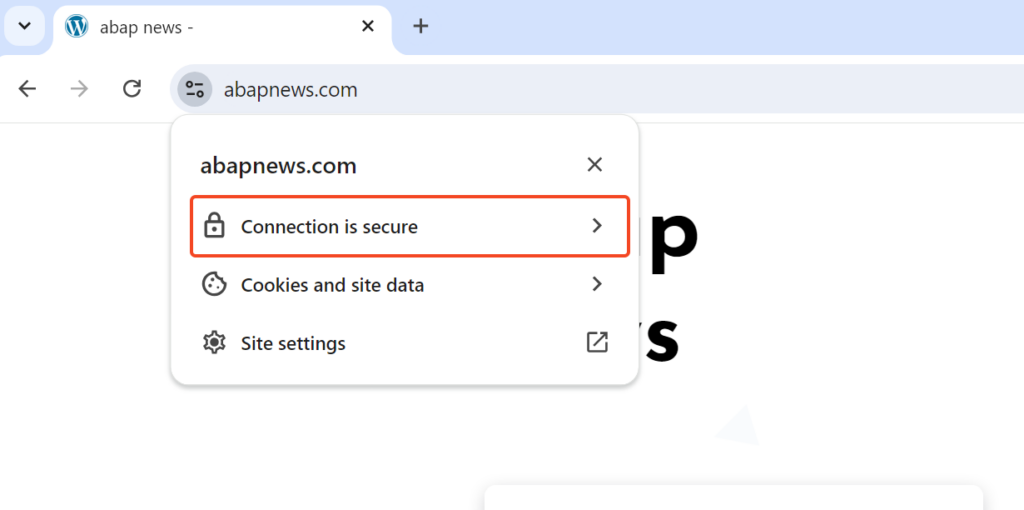
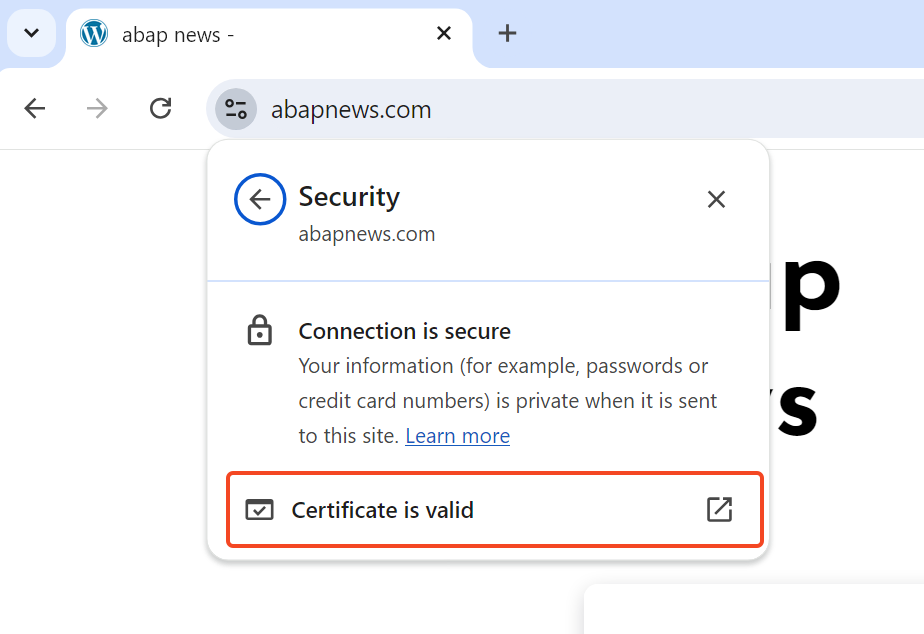
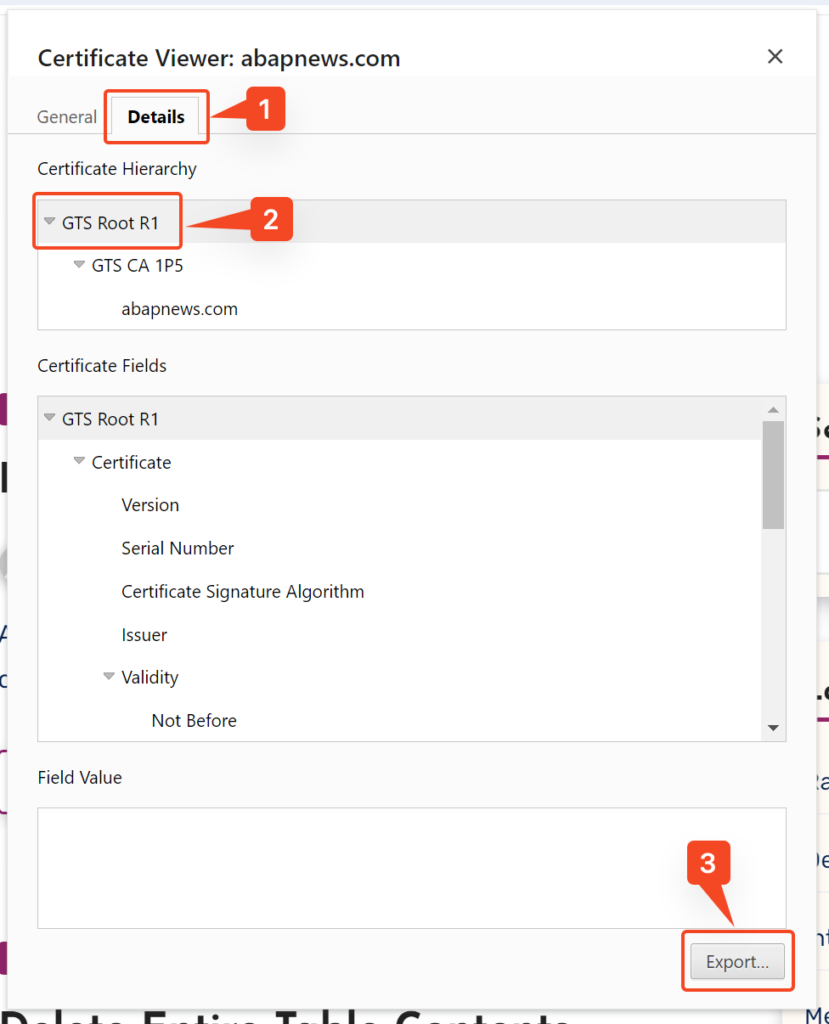
Compare the fingerprint with the one published by the certificate authority before you trust it.
2. Import it in STRUST
- Open
STRUSTand switch to change mode. - Select the PSE your call uses: SSL client (Anonymous) for
ssl_id = 'ANONYM', SSL client (Standard) for'DFAULT', or the PSE named in the SM59 destination. - Import the certificate and choose Add to Certificate List.
- Save. If the new certificate is not picked up, restart the ICM in
SMICMwith your administrator.
You only need to change the PSE that is used.
3. Test
Run the connection test of the SM59 destination or call the service from ABAP.
| Message | Likely cause |
|---|---|
SSSLERR_PEER_CERT_UNTRUSTED |
Root or intermediate certificate missing in this PSE |
SSSLERR_SERVER_CERT_MISMATCH |
Host name is not covered by the certificate |
| Handshake failure | Protocol or cipher not supported; check the SMICM trace |